The Week 29 That Was : School Children

The General Household Survey, 2021, released by Statistics South Africa, indicates that 18,8% of children lived with neither their biological parents while 33,8% lived with both parents, and 43,4% lived with their mothers. Approximately 11,5% of children were orphaned, having lost one or both parent.

COVID related locked down saw, the percentage of children that attended grade R, preschool, nursery school, crèche, and edu-care centres decreasing from 36,8% in 2019 to 28,5% in 2021.

The percentage of individuals aged 20 years and older who did not have any education decreased from 11,4% in 2002 to 3,2% in 2021. This is while those with at least a grade 12 qualification increased from 30,5% to 50,5% over the same period.

It is a slight improvement from 2002 to 2021.
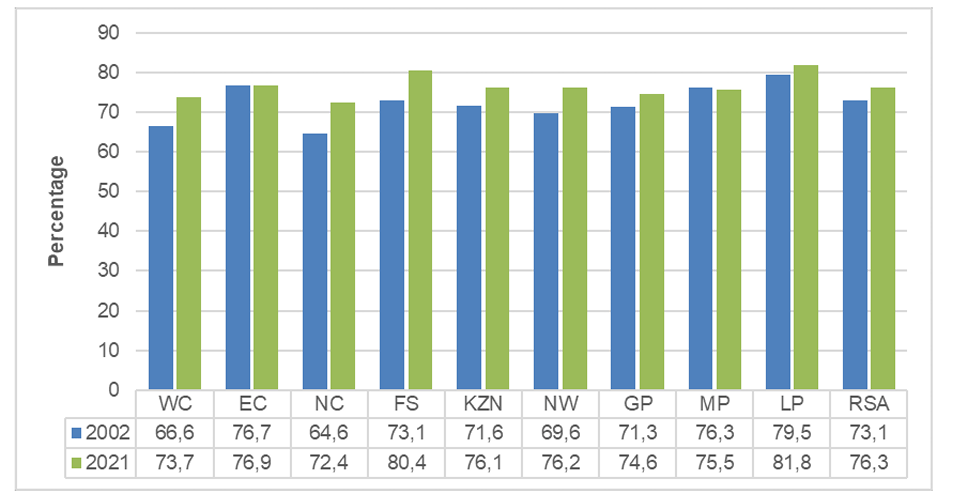
Percentage of individuals aged 7 to 24 years who attended educational institutions by Province

The Week 28 That Was : Bucket System

Statistics SA report contains results of the 2020 non-financial census of municipalities. About 14 million households receive services from municipalities in one way or another. Sad to say that Free State and Eastern Cape provinces reported an increase in the provision of bucket toilets from 2019 to 2020. The Free State has 26 300 units while the Eastern Cape has 11 595 still using the bucket system.

A program to eradicate the buck system was launch under “Government Bucket Eradication Programme” with reversal of progress in the Free State when comparing 2019/2020. Government needed over R700 million to eradicate the system in the Free State and the Northern Cape.

Number of consumer units using the bucket toilet system provided by municipalities in each province: 2019 and 2020

The Week 27 That Was: Manufacturing Production

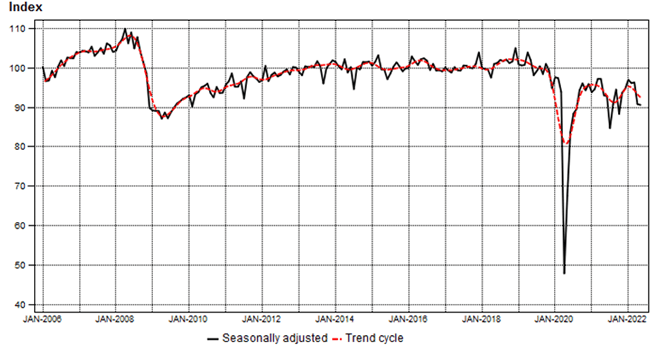
Manufacturing production decreased by 2,3% in May 2022 compared with May 2021. The index hasn’t recovered from COVID19 and Lockdown measures of 2020 (Figure 1, Volume of manufacturing production). Manufacturing is the process where machines produce goods from raw materials. Production is the process of converting resources into finished products.

Figure 1, Volume of manufacturing production

The largest negative contributions were made by the following divisions:

· motor vehicles, parts and accessories and other transport equipment (-19,2% and contributing -2,1 percentage points);

· food and beverages (-4,1% and contributing -0,9 of a percentage point);

· wood and wood products, paper, publishing and printing (-8,1% and contributing -0,8 of a percentage point); and

· basic iron and steel, non-ferrous metal products, metal products and machinery (-2,3% and contributing -0,5 of a percentage point).

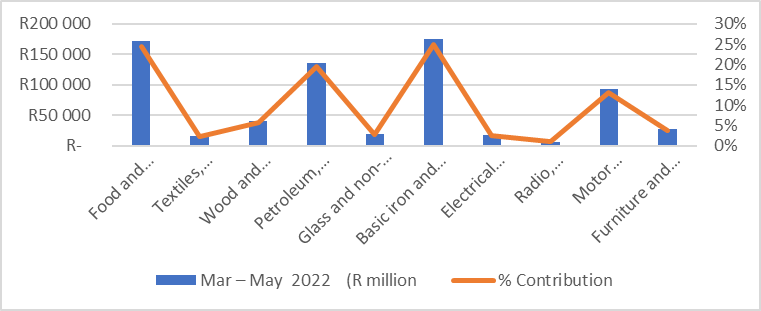
Figure 2, Seasonally adjusted manufacturing sales at current prices for the latest three months by division

Food , Beverages and Basic Iron and Steel contributes 49% of manufacturing production. These divisions could be the largest contributor to employment.

The Week 27 That Was : Stage 4 Load shedding

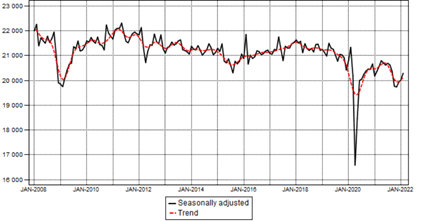
Stage 4 load-shedding equates to about 4,000 MegaWatts per hour or 4 GigaWatts per hour of electricity not being available. This is about 20 % of Eskom Power Generation of about 21 GigaWatts. Stage 4 implies 4 million kettles being boiled at the same time. It would take an equivalent to nearly the full installed generating capacity of the giant Medupi power station – which it is now estimated will cost R18 billion to complete.

One could infer that 20% of the business are not operating due to lack of electricity. The question is whether the would be a return on the R18billion investment.

Electricity Generation / Production in South Africa

The Week 26 That Was: Consumer Price Index

The consumer price index (CPI) has for May 2022 hit 6.5% — from 5.9% in April and 5.2% in May last year. CPI is a measure of the average change overtime in the prices paid by urban consumers for a market basket of consumer goods and services. The prices of consumer goods and services should increase slowly on a year-to-year basis.

The basket encompasses 12 categories of consumer expenses such as: (1) Food and non-alcoholic beverages, (2) Alcoholic beverages and tobacco, (3) Clothing and footwear, (4) Housing and utilities, (5) Household contents, (6) Equipment and maintenance, (7) Health, (8) Transport, (9) Communication, (10) Recreation and culture, Education, (11) Restaurants and hotels and (12) Miscellaneous goods and services, including insurance and financial services.

A high CPI implies general expenses of what consumer buy would be increasing. The South African Reserve Bank uses interest rates to discourage spending. The theory is that consumers will not spend if interest are higher due to less money to spend.

The Week 24 That Was: Food and Beverages Industry,

Total income generated by the food and beverages (excluding manufacturing) industry increased by 13,6% in March 2022 compared with March 2021, according to Statistics SA. The industry came to a complete stop because of COVID19 and lockdown restrictions. The income was in the region of R3 Billion in March 2019, almost R 0 Billion in March 2020 and now slowly getting back at R1.8 Billion in March 2022.

Figure 1, Income of Food and Beverage Industry (Excluding Manufacturing)

The Food and Beverages Manufacturing SETA (FoodBev SETA) puts total industry turnover at R61.95 Billion. This is out of 13 987 registered companies.

The industry employs 256 344 people of which food preparation has the highest share contributing 47%. Future challenges and opportunities lie in rapid adoption of food technologies and digitisation (WEF, 2020). Job opportunities lie in understanding of digital supply chains, relationship management and digital skills.

Employment in the food and beverages industry for the last pay period ended on or before 30 June, 2009 – 2018

The Week 23 That Was : Working-Age Population

The working-age population increased by 144 000 in the first quarter (Jan 22 – Mar 22) compared to the fourth quarter (Oct 21 – Dec 21). At the same time, 370 000 jobs were gained between in fourth quarter (Oct 21 – Dec 21). The biggest increase is in Community and Social Services (281 000), Manufacturing (263 000) and Trade (98 000).  This is according to the Quarterly Labour Force Survey (QLFS), it is a household-based sample survey conducted by Statistics South Africa (Stats SA).

The report further indicates that the number of discouraged work-seekers decreased by 54 000 (1,4%) and the number of people who were not economically active for reasons other than discouragement decreased by 112 000 (0,8%). Overall, the unemployment rate decreased to 34,5% compared to previous quarter (Oct – Dec 21).

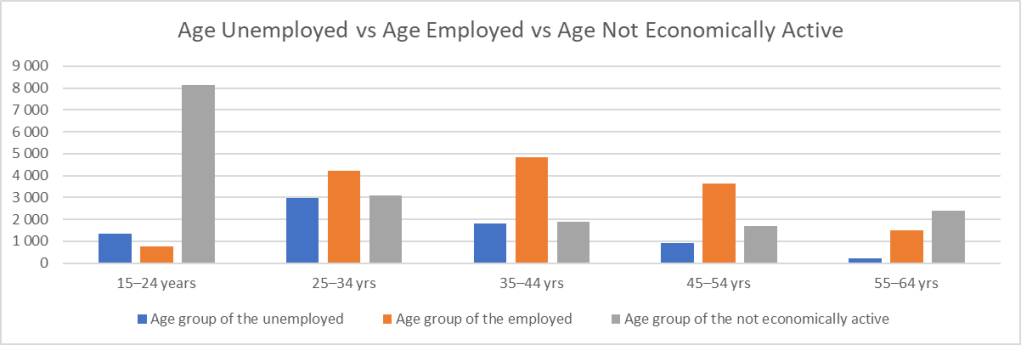
The graph below shows the pending crisis on the (15 – 24) age bands if not studying.  The economy needs to generate additional jobs.

The Week That 22 Was : Road Accidents

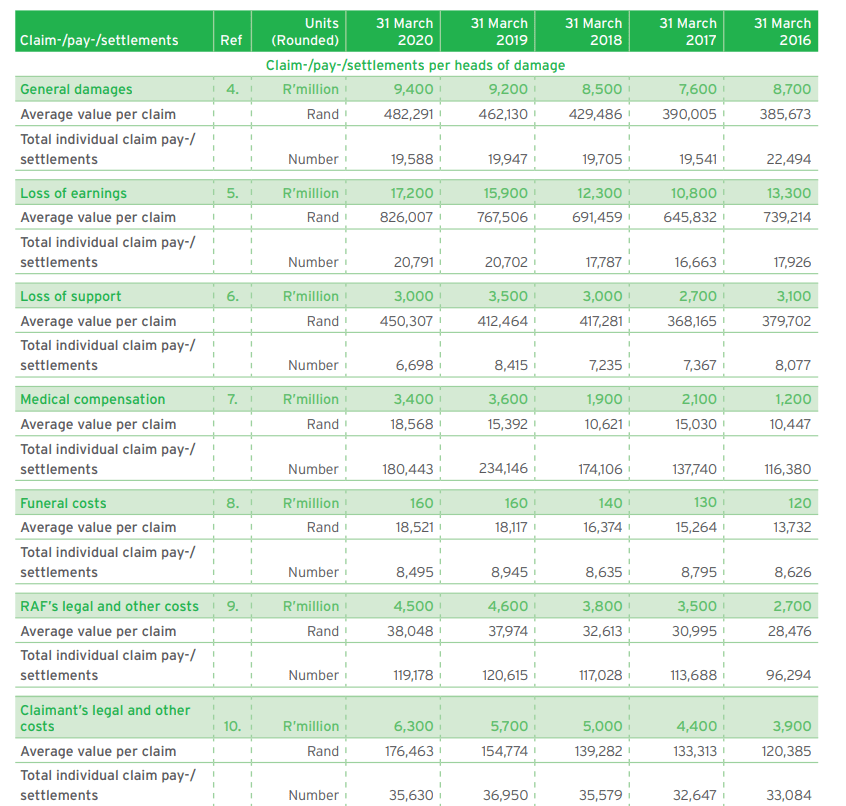
The Road Accident Fund (RAF) registered 303,695 new claims and finalised 258,382 claims in 2019/20. Compare to 604 281 deaths for the year 2019/2020. RAF provides compulsory cover to all users of South African roads against injuries sustained or death. It is a form of indemnity insurance to persons who cause the accident. The fund settled R44.0 Billion of which R3.4 Billion is medical costs.

Those that do not receive medical care attention tend to have sustained loss of income of which R20.2 Billion is paid. The rest disappears between Legal, experts and damage costs. The average medical costs claim against RAF is R18,568. It implies that an average road users must have R18,568 for any potential road accident if not on medical aid. Otherwise, one ends up in the government hospitals.

There are solutions to help road users with medical care attention in case of an accident

The Week 21 That Was : Civil cases for debt

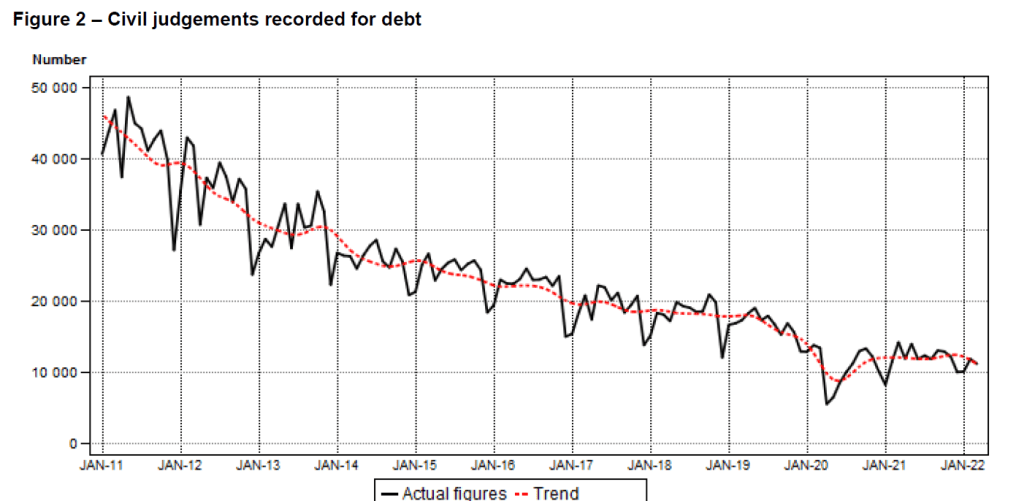
Statistics South Africa released a report on civil cases for debt. In March 2022, 11 126 civil judgements for debt amounting to R257,2 million were recorded. A civil judgment is a ruling against a defendant in a court of law. It refers to a non-criminal legal matter and often requires the defendant to pay damages. The value of civil default and consent judgement for debt is R3 567 050,00. Money lent makes up 28% of civil summons / cases (Total and Private) for debt.

There has been 41 921 civil summons issued for debt in the first 3 months of 2022 against 37 100 for first three months of 2021. The largest contributor for the decrease is services and rent. The report is based on a survey of 203 magistrates’ courts which represents approximately 98% of all cases in South Africa.

It has been a downward trend from 2011…click here to read full report

The Week 20 That Was : Cooking Oil

The price of sunflower oil has been increasing since the beginning of the war between Russia and Ukraine. The two countries are responsible for between 60% to 78% of the world’s sunflower oil supply.

The global price of Sunflower Oil was 1,445.2 (Oct 2021) and now 2,250.0 (Apr 2022) (in U.S. Dollars per Metric Ton) which is 64% increase. Consumers in South Africa have seen a 55% increase in cooking oil of which sunflower oil is the key ingredient. Cooking oil now cost between R99.99 to R119.99 for 2-litre’s.

Many of the fast food vendors and caravan owners who buy oil in bulk (20 litres at a time) said they now pay about R700 whereas they used to pay less than R500. In one newspaper article, as street vendor claims to use 60 liters of cooking oil per day (read more).

The has been price increases of Magwenya, Kota, Russian Sausages and so on. The economic costs of the price of cooking oil are downplayed

(Sunflower Oil prices in U.S. Dollars per Metric Ton)